


Medical education
Medical education is an integral part of respiratory medicine. Respiratory clinicians are involved in teaching, supervising, assessing and fostering positive learning environments for future healthcare professionals across their development. The Respiratory Curriculum outlines the knowledge, skills and behaviours trainees need to demonstrate before Certificate of Completion of Training (CCT), enabling them to contribute confidently to a supportive learning environment and the ongoing development of the respiratory workforce.
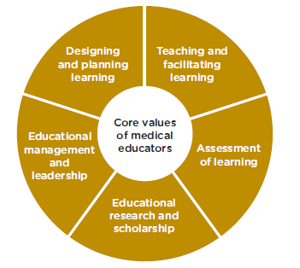
Training in medical education
Trainees are strongly encouraged to undertake training in teaching skills. Opportunities to develop as a medical educator include:
- Short teaching skills courses offered by organisations such as the Royal College of Physicians and the Royal Society of Medicine
- Postgraduate qualifications, including a PGCert, PGDip or Master's in Medical or Clinical Education, available full-time, part-time and through distance learning from a range of UK universities and professional bodies
- Professional recognition through organisations such as Advance HE, which enables educators to gain formal recognition of their teaching expertise through a specialist body
OOP opportunities in medical education
Out of Programme (OOP) time can provide valuable opportunities to develop as a medical educator, much as it can be used to pursue research interests. Many trainees undertake clinical teaching fellow roles, which often include support towards educational qualifications such as a PGCert or Diploma.
These roles vary widely and may be based in:
- Hospital trusts
- Medical schools
- Royal College of Physicians (RCP) policy units
- Health Education England (HEE)
If you are considering OOP time, it is important to plan ahead. Most programmes only permit OOP exits in April or October, and you will usually need to provide at least six months' notice to your Training Programme Director (TPD).
Read more about clinical teaching fellowships
The future of medical education
The General Medical Council (GMC) expects all doctors to demonstrate skills in teaching and training, but recognises that some will take on specialist education roles. They have defined four trainer roles that require recognition:
Postgraduate
- Named Educational Supervisor
- Named Clinical Supervisor
Undergraduate
- Lead coordinators of training at each education provider
- Doctors who oversee student progress at each medical school
If you are considering a long-term role in medical education, it is worth reviewing these requirements early. Speaking with your Director of Medical Education, Postgraduate Dean or Head of School can help you identify opportunities to develop your experience toward CCT.
Written by:
Dr Hussain Basheer